Online HIV Dating: Meeting Someone Is Only the Beginning
Online dating can make the world feel a lot smaller.
You can talk to someone across town, in another city or hundreds of miles away. And if you want to meet other people living with HIV, going online can give you access to people you might never cross paths with in everyday life.
But finding someone is only the first part.
The harder question usually comes next:
Is this person actually worth getting to know?
A shared HIV status can make the first conversation easier. It can remove one unknown. It may even make it easier to talk openly about parts of life that other people don’t immediately understand.
But it doesn’t tell you whether the two of you are compatible.
It doesn’t tell you whether the person is honest.
And it definitely doesn’t tell you whether a good conversation will turn into a good relationship.
Online dating works best when you treat the match as a beginning — not as proof that you’ve found the right person.
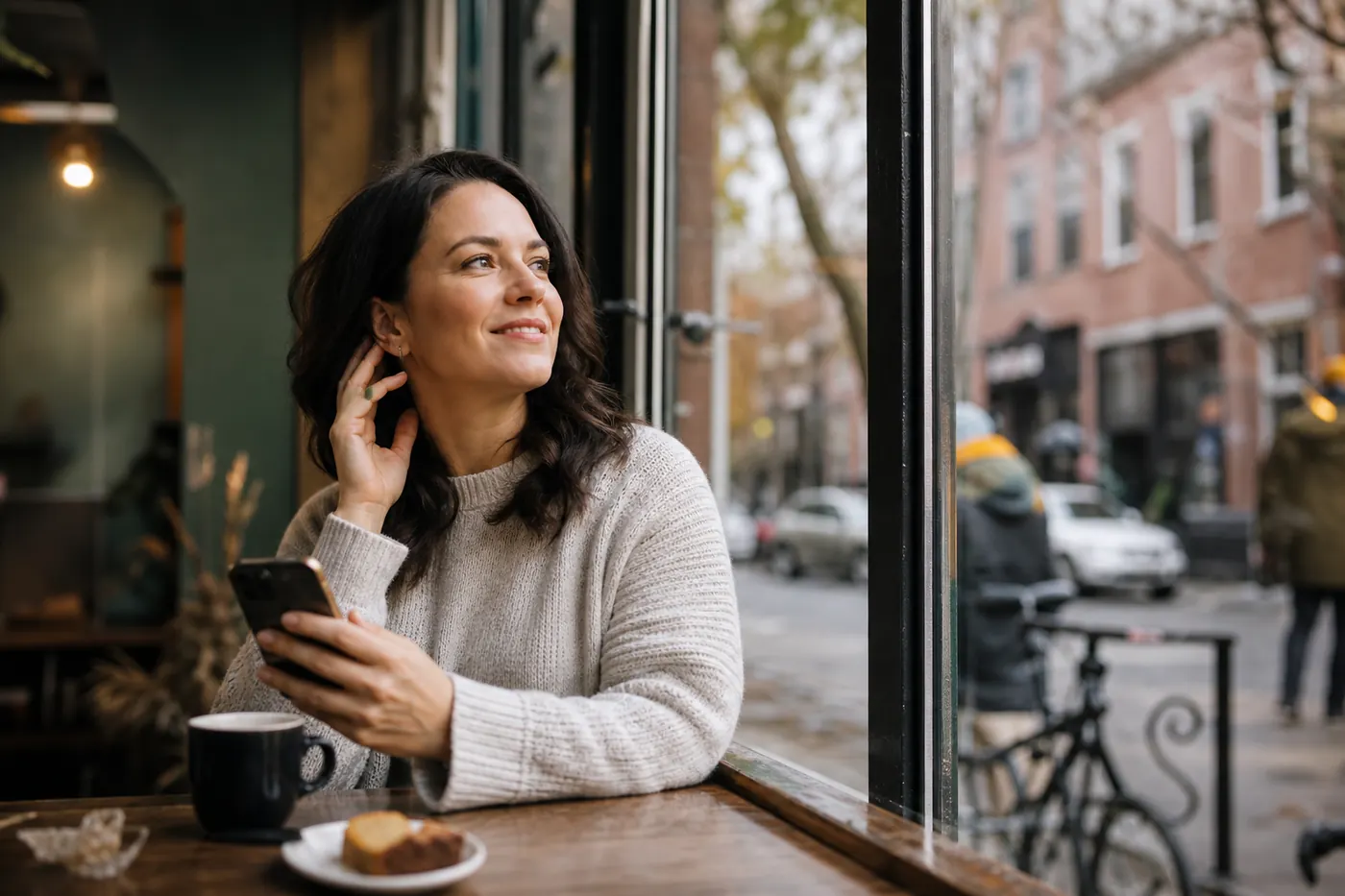
Having HIV in Common Is a Starting Point, Not Compatibility
Meeting another HIV-positive person can feel different.
There may be less explaining.
You might not have to wonder whether HIV will completely change how the other person sees you.
That shared understanding can be a relief.
But after that, ordinary dating still takes over.
Do you actually like talking to each other?
Are you looking for the same kind of relationship?
Does the other person ask about your life, or mostly talk about themselves?
Can you disagree without things becoming uncomfortable?
Do their words and actions generally match?
Would you still be interested in this person if HIV were taken out of the conversation entirely?
That last question can be useful.
Because sometimes a shared experience creates a strong sense of connection before two people have figured out whether they actually fit.
HIV can be something you understand about each other.
It shouldn’t have to be the thing holding the entire connection together.
A Deep Conversation Can Feel Like Trust Before Trust Exists
Online conversations can become personal very quickly.
You might start talking in the evening and suddenly realize it’s 2 a.m.
You’ve talked about past relationships.
Family.
Things you regret.
Times you were rejected.
What happened around your diagnosis.
Things you normally don’t tell someone you’ve just met.
That kind of conversation can feel incredibly close.
And the closeness may be real.
But emotional depth and trust do not always grow at the same speed.
Knowing somebody’s difficult history is not the same as knowing how they behave.
You still don’t know how they deal with frustration.
Whether they respect boundaries.
Whether they keep promises.
Whether they disappear when things become inconvenient.
Whether they are kind when they don’t get what they want.
Those things take time to see.
So enjoy a conversation that feels good.
Just don’t let one intense night of talking convince you that the normal process of getting to know someone has already happened.
Let Access Grow With Trust
You don’t have to treat every person online like a threat.
But you also don’t need to give somebody access to your whole offline life in the first few conversations.
A first name may not feel sensitive.
Neither does mentioning where you work.
Or telling someone your Instagram.
Or naming your neighborhood.
Or talking about the gym you go to every morning.
But put enough small details together and someone may know far more about your real life than you intended.
A useful rule is:
LET ACCESS GROW WITH TRUST.
There is no required order. The point is simple: the amount of access someone has to your offline life does not need to grow faster than your trust.
At the beginning, you can keep things fairly general.
As the person becomes more familiar and their behavior gives you reasons to trust them, you can decide what else you’re comfortable sharing.
That isn’t being secretive.
It’s simply letting the amount of access someone has to your life grow at roughly the same pace as the relationship itself.
And if a conversation reaches the point where you’re deciding whether, when or how to share your HIV status with someone who does not already know, that deserves its own decision rather than being rushed by the pace of online messaging.
Read the HIV Disclosure Guide →Pay Attention to How the Conversation Feels
People often talk about “red flags” in online dating.
But not every person who is wrong for you is dangerous or dishonest.
Sometimes the conversation itself tells you enough.
Ask yourself how you usually feel after talking to them.
Interested?
Relaxed?
Curious?
Or drained?
Pressured?
Confused?
They never seem curious about you
You know everything about their job, their ex and their weekend. They know almost nothing about you.
That may not mean anything sinister. It may simply mean the connection is one-sided.
Every conversation becomes sexual
Sexual chemistry can be part of dating.
But if you keep moving the conversation somewhere else and the other person keeps dragging it back, that tells you something about whether your interests match.
They become intense very quickly
Constant messages. Big promises. Talking about a future together after a few days. Getting upset because you didn’t answer immediately.
Intensity can feel flattering. It can also make it harder to notice whether the relationship is actually developing at a healthy pace.
They keep pushing for more access
Your phone number. Your social media. More photos. Your exact location. A meeting before you’re ready.
One request may be harmless. Repeated pressure after you’ve shown hesitation is different.
Their story keeps changing
Small inconsistencies happen. People forget details.
But if basic facts about their life repeatedly shift, you don’t have to ignore that just because you enjoy talking to them.
None of these things automatically makes someone a bad person.
They’re simply information.
And online dating gets easier when you start treating behavior as information instead of always trying to explain it away.
Voice and Video Can Reduce Some of the Guesswork
Text is useful.
It is also very easy to control.
You can rewrite a message five times before sending it. You can disappear for an hour and return with the perfect response.
That makes texting comfortable — but it can also leave a lot of uncertainty.
A short voice or video call can sometimes help.
Not because you need to conduct an investigation.
And not because a video call proves somebody is trustworthy.
It simply gives you another layer of information.
How does conversation feel when neither of you has several minutes to write a response?
Does the person broadly match what they’ve told you about themselves?
Do you still enjoy talking when the conversation is happening in real time?
If you’re considering meeting someone, a call can make the move from “person on my screen” to “person I might meet” feel less abrupt.
Verification reduces uncertainty. It does not replace judgment.
A real person can still be the wrong person for you.

When Someone Only Wants to Talk Forever
Some online connections never seem to move.
You talk every day.
Good morning.
Good night.
You know what they had for lunch.
You know what irritated them at work.
Maybe you’ve been talking for weeks.
But whenever the idea of a voice call, video call or actual meeting comes up, something happens.
Not tonight.
Maybe next week.
Work is crazy.
The camera is broken.
They aren’t ready.
Any one of those explanations can be completely reasonable.
But if avoiding every step toward a more real connection becomes a pattern, that pattern matters.
A useful way to think about it is:
AVOIDANCE IS INFORMATION.
You don’t have to accuse the person of lying.
You don’t even have to know why they’re avoiding progress.
You only have to ask whether the kind of connection they are offering matches what you want.
If you’re happy having someone to message, that may be enough.
If you joined online dating because you want to date in real life, it’s reasonable to expect the relationship to eventually move somewhere.
Don’t Confuse Constant Messaging With a Relationship
Online dating can create a strange middle ground.
You may speak to someone every day.
You may tell them things nobody else knows.
They may be the first person you message in the morning and the last person you talk to at night.
Emotionally, it can start to feel like a relationship.
But nothing has actually changed outside the chat.
That doesn’t make the connection fake.
It just means it may be worth asking:
If nothing changed for the next three months, would I still be happy with what this is?
If the answer is yes, great.
If the answer is no, then what you need may not be more messages.
You may need progression.
When Should Online Become Offline?
There is no perfect number of days to wait before meeting somebody.
Three days might feel too fast with one person and completely natural with another.
Three weeks might be sensible — or it might simply be three weeks of avoiding the obvious next step.
Instead of counting days, look at what has happened.
- MESSAGE
- CONSISTENT CONVERSATION
- VOICE / VIDEO
- BOTH WANT TO MEET
- SIMPLE FIRST DATE
The conversation has been reasonably consistent.
The person’s basic story makes sense.
You both actually want to meet.
You feel able to say no or change plans without worrying about their reaction.
There isn’t constant pressure.
You know enough to feel curious about what they’re like in real life.
That can be enough.
The first meeting does not have to answer:
“Could I build a life with this person?”
It only needs to answer something much smaller:
Now that we’re in the same room, do I still want to know them better?
That takes a lot of pressure off.
For a first meeting, choose somewhere that makes it easy for both of you to arrive and leave independently.
Coffee.
Lunch.
A drink.
A walk somewhere busy.
Something simple.
You can always plan a longer second date.

The First Date Is New Information
One mistake people make after a long online conversation is treating the first date like the final stage of a relationship that has already been built.
It isn’t.
You may know a lot about each other.
But this is the first time you’re learning what the connection feels like in the same physical space.
THE SCREEN IS GONE.
WHAT CHANGES?
Do silences feel comfortable?
Does the chemistry you imagined actually exist?
Does the other person listen?
Are they polite to people around them?
Does the conversation still feel balanced without a screen between you?
You’re not trying to prove the online connection was real.
You’re collecting new information.
Sometimes it gets better in person.
Sometimes it doesn’t.
Both outcomes are useful.
Long-Distance HIV Dating: Ask the Boring Questions Earlier
One of the biggest advantages of online HIV dating is reach.
You’re no longer limited to the people living within a few miles of you.
That can be especially valuable when the community you want to meet is relatively small.
But distance has a habit of turning emotional questions into practical ones.
CHEMISTRY
Do we like each other?
REALITY
How often can we meet?
Who travels?
What does it cost?
Could either person move?
What are we building?
It’s easy to ask:
Do we like each other?
Eventually, you also need to ask:
Could this actually work?
How often could you realistically meet?
Who would travel?
How expensive would that become?
Would one of you eventually consider moving?
Do both of you want the same level of commitment?
Are you building toward something, or mostly enjoying having someone to talk to every day?
These questions aren’t very romantic.
That is exactly why they matter.
You don’t need to ask them on the first night.
But if a long-distance connection starts becoming serious, avoiding them doesn’t make the distance disappear.
Shared Experience Shouldn’t Create Automatic Trust
Meeting someone else who lives with HIV may create a feeling of safety very quickly.
They understand something deeply personal about you.
Maybe they’ve been through similar experiences.
Maybe you feel less judged.
That can matter.
But try not to turn:
Those are different judgments.
Having HIV in common tells you something about their life.
It does not tell you how they treat partners.
It does not tell you whether they respect boundaries.
It does not tell you whether they are financially honest.
It does not tell you whether they are emotionally available.
Shared experience can open a door.
The person still has to show you who they are after you walk through it.
Keep Going, Slow Down or Stop?
Online dating becomes easier when every uncertain situation doesn’t have to become a dramatic yes-or-no decision.
Sometimes the answer is simply:
keep going.
Sometimes:
slow down.
And sometimes:
stop.
Keep going when...
The conversation feels mutual.
You both show genuine curiosity.
Their actions mostly match what they say.
Your boundaries are respected.
You can disagree without being punished for it.
The connection is gradually becoming more real.
Slow down when...
Everything feels extremely intense very quickly.
You notice yourself sharing things before you’re comfortable.
You feel pressure to prove that you trust them.
You’re making excuses for things that keep bothering you.
You haven’t had enough time to see whether the person is consistent.
Slowing down doesn’t mean ending the connection.
It gives you more time to see it clearly.
Stop when...
Your boundaries are repeatedly ignored.
Basic stories don’t add up.
Money or financial emergencies suddenly become part of the relationship.
You feel afraid to say no.
The person threatens, humiliates or intimidates you.
You keep feeling worse after talking to them and are staying mainly because you’ve already invested a lot of time.
You don’t owe an online connection unlimited chances.
HIVDATINGCLUB
Online Dating Should Eventually Make Your World Bigger
The goal of online dating isn’t to become better at messaging strangers.
It’s to make it easier to meet people you might actually want in your life.
Sometimes that means a relationship.
Sometimes it means a date that goes nowhere.
Sometimes it means talking to someone for two weeks and realizing you aren’t right for each other.
That isn’t wasted time.
You learned something.
About them.
About what you’re looking for.
And sometimes about what you’re no longer willing to accept.
HIVDatingClub is here to make those decisions easier — from finding places to meet people to understanding what happens after the first message.
COMMON QUESTIONS
Online HIV Dating FAQ
Is online HIV dating only for people who want an HIV-positive partner?
No. Some people specifically prefer meeting another HIV-positive person because shared experience matters to them. Others use HIV-focused or positive-singles communities while remaining open to partners with a different HIV status. The important thing is knowing what you want rather than assuming one approach is required.
How long should I talk to someone online before meeting?
There is no universal number of days. A better question is whether the conversation has been consistent, whether both people want to meet, whether basic information makes sense and whether you feel comfortable saying no or changing plans. You don’t need complete trust before a first date, but you should have enough information to feel comfortable taking the next step.
Should I video call someone before meeting?
You don’t have to, but a short voice or video call can reduce some of the uncertainty created by text-only communication. It can help you see how conversation feels in real time. It still doesn’t prove that someone is trustworthy or compatible.
What if someone keeps talking to me but never wants to meet?
Look at the pattern rather than one excuse. If your goal is real-world dating and the other person continually avoids voice, video or meeting without any movement over time, it is reasonable to ask whether the connection is offering what you actually want.
Can long-distance HIV dating work?
It can, but chemistry alone usually isn’t enough. If the relationship becomes serious, practical questions matter: how often you can meet, who travels, what it costs and whether there is any realistic path toward living closer together in the future.
How do I know if an online connection is moving too fast?
Pay attention to whether the emotional intensity is moving faster than your actual knowledge of the person. Sharing very personal experiences, constant messaging or talking about a future together can create closeness quickly. If you feel pressured, overwhelmed or unsure whether you really know the person yet, slowing down can give you more useful information.
Ready to Move Beyond the Messages?
A good online conversation is a start.
What matters next is whether the person behind the screen is someone you actually want to keep getting to know.
Take your time.
Notice what they do, not just what they say.
Let trust grow with the relationship.
And when the connection feels ready to move into real life, make that decision because you want to — not because online dating has created a false sense of urgency.
Start Meeting People